

Data Dawgs — Data, Not Dogma
The question behind the work
How do we know what we think we know?
Data Dawgs is a personal laboratory for making better decisions under uncertainty — with evidence meant to be inspected by you and your AI.
Data, Not Dogma. Bring Your Own Dawg. The subject changes; the method stays the same.
Data, not dogma
Most bad decisions don't begin with bad math. They begin one step earlier, when an assumption quietly becomes a fact because nobody asks where it came from.
That's the work here: separate what we know from what we think, what we measured from what we modeled, and what happened from the story we told afterward. State the belief. Find the evidence. Name the uncertainty. Try to break the conclusion. Then keep the receipt.
Data, Not Dogma is not a promise that numbers are right. Numbers can be stale, biased, noisy, badly measured, or pointed at the wrong question. It is a promise that the answer has to remain open to challenge.
A method, not a topic
Fantasy football is here because it's a wonderful decision laboratory: incomplete information, noisy signals, adversarial markets, limited budgets, feedback, and a scoreboard. Forecasting has the same bones. So do betting, what to eat, what to watch, and plenty of decisions that have nothing to do with sports.
That is why Data Dawgs can wander without losing the plot. The domain is just where the question happens to live. The toolkit is epistemology, forecasting, metacognition, decision hygiene, statistics, and a healthy suspicion of our own certainty.
Bring your own Dawg
For generations, we've called the dog man's best friend. AI is becoming a new kind of dawg beside us.
Dogs earned that trust as companions and collaborators in the physical world. AI can play a different role — helping us navigate information, uncertainty, and decisions.
That changes what a useful website should be. The page you read should not be the end of the evidence trail. Your AI should be able to inspect the underlying state, trace a number to its source, challenge the method, and check the record too.
Bring Your Own Dawg.
Built for you. Readable by your AI. Verifiable by either.
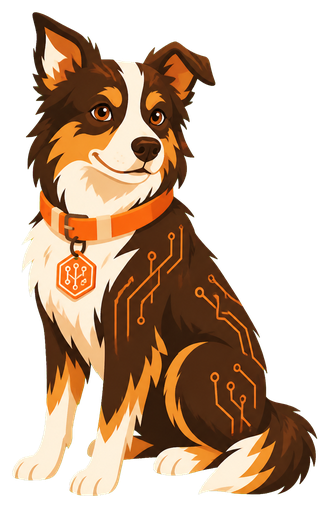
This does not mean handing judgment to a chatbot. The point is the opposite: another reader means another chance to catch a bad assumption. Ask your dawg to reproduce the math. Ask what evidence would reverse the conclusion. Ask it to compare today's claim with yesterday's receipt.
AI should make Data Dawgs easier to interrogate, not easier to believe.
Receipts over vibes
A forecast is cheap after the game. A model looks brilliant when its failures disappear. A source is not provenance if nobody can tell when it was pulled. So the standard is deliberately annoying: dates, sources, methodology, assumptions, and a record that survives being wrong.
The next layer goes further. Agent-facing data is being rebuilt around explicit freshness and provenance, and forecast receipts are being designed for external timestamp anchoring so verification does not depend on Data Dawgs asking you to trust Data Dawgs.
Important: that independently anchored verification layer is a build target, not a feature being claimed as live today. Until it ships, the site should say exactly what it can prove and no more.
The dog who pulled the curtain
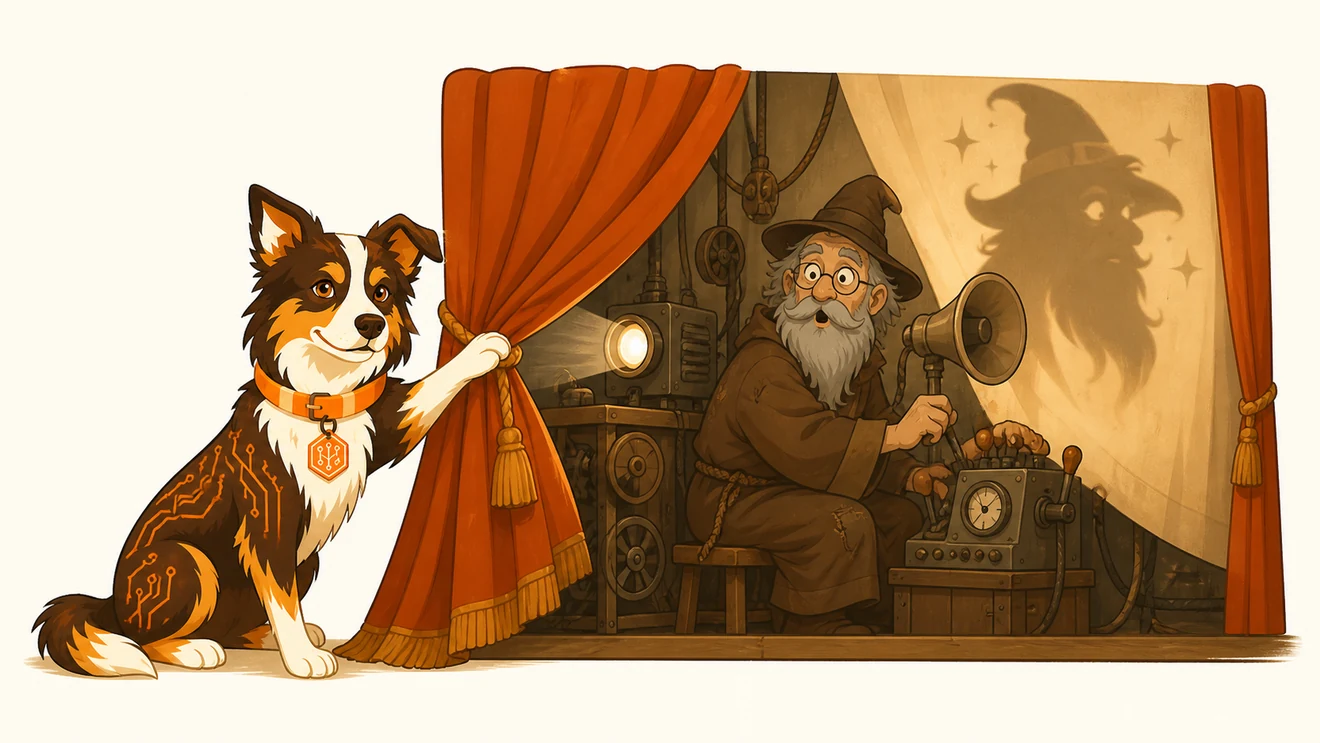
Everybody remembers the wizard. Almost nobody remembers what actually beat him: a small dog wandered over and pulled the curtain back. Toto didn't argue with the giant floating head. He went and looked.
That's why the Data Dawgs assistant is Toto. His job is not to sound smart. His job is to look behind the answer: read the state he actually has, separate model output from observation, and say not much when the evidence does not support much.
Toto is the first version of the idea. Bring Your Own Dawg is the bigger one: the same evidence should be inspectable by the AI you choose, not only the one built into this site.
Trust has to be earned
The site is a workshop, so unfinished work stays visible. A solver can compute and still be unvalidated. A polished dashboard can still be wrong. A failed idea can still teach us something. Every tool belongs to a lifecycle that says what we actually know about it.
The path is simple: a tool starts as a Pup. If it survives validation and proves ready to work, it earns its collar and becomes a Dawg. If the evidence says stop, it goes to The DawgHouse with the reason attached.
Fantasy football is the first deep build: draft tools, DFS modeling, league analysis, NFL data, and prediction receipts. It is the proving ground, not the boundary.
Pups
Live and useful, not yet validated. Everything starts here. It may compute real answers and still have open questions about calibration, assumptions, data quality, or edge. A Pup means use it with your eyes open.
Working Dawgs
They earned the job. A tool becomes a Dawg only after its evidence survives validation. Forecasts need receipts against a benchmark chosen in advance; measurement tools need named sources and reproducible math. Looking finished is not evidence.
NFL EPA Stats, nfelo Power Ratings, and the Fantasy Draft Dashboard have earned their collars. The dashboard and auctioneer have run a live 14-team draft end to end. The nfelo mirror stays honest about what our backtest found: no demonstrated winner-picking edge over the closing line.
The DawgHouse
Where ideas go when the evidence says stop. Shelved is not erased. Shelved work can be rehabilitated—that's why it goes to The DawgHouse, with the failure, the reason, and the condition that could reopen the case kept attached. The DawgHouse is no longer empty; every tenant keeps its reason and its way back.
From Cleveland
Cleveland gives you plenty of practice loving something without confusing love for evidence. That's a useful distinction.
Be a fan. Have a take. Root like hell. Then, when a decision actually has to be made, pull the curtain back and look.
Nose down, ears up. We sniff out the signal.
Everything else is barking.
There's a second version of this site you can't see — mirrored, parallel, built for AIs instead of humans. Same data, same receipts, machine-readable. Tap 🙃 on any page to visit the Upside Down.